The Brazilian Amazon Atlas can serve as a gateway to knowledge of the region and as an instrument for learning about the complex relationships that make up this immense territory. From this, we hope that it can foster debates and dialogues, as well as inspire solutions to the different challenges, in order to encourage a sustainable and self-determined future for the Amazon and its peoples.
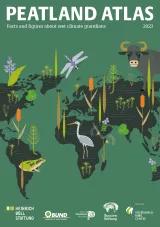
The Peatland Atlas 2023 highlights the consequences of the destruction of these unique habitats, but also the potential of wet peatlands for mitigating climate change.
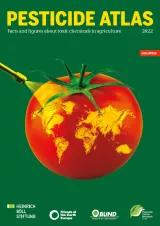
The Pesticide Atlas raises awareness, provides comprehensive information and fosters nuanced debate around agrochemicals used for pest control. It sheds light on different aspects from scientific research, including the impact of pesticides on soils, waters, biodiversity and health, and highlights alternative models with a more stringent implementation of integrated pest management where synthetic substances are only a last resort option.
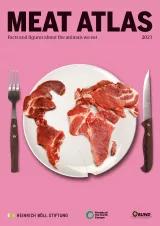
There is hardly any other food that pollutes our environment and the climate as badly as meat. However, no government in the world currently has a concept of how meat consumption and production can be significantly reduced. But if the sector continues to grow as it has up to now, almost 360 million tons of meat will be produced and consumed worldwide in 2030. With ecological effects that are hard to imagine.