

Agribusiness Atlas 2026
Across Africa, millions of people still rely on territorial markets rooted in local food cultures and informal trade. As food imports rise and ultra-processed diets spread, these food networks are not relics of the past, but essential to Africa's future. Yet these systems are rarely in the focus of agricultural or investment policy.

Africa is not fed primarily by the globalised, input-intensive food economy that dominates many policy debates. Much of the continent's food still passes through local and territorial markets rooted in small-scale farming, short supply chains, and culturally specific diets. Recent advocacy work and policy research argue that territorial markets remain central to food distribution across much of Africa, even though official statistics often fail to capture their full scale and governments fail to prioritise them in investment strategies.
The picture becomes clearer when we look at who keeps these markets running every day. Territorial markets are more than places of exchange: they connect producers, transporters, processors, cooks, and traders. Women play a particularly important role within these networks. Research on African trade consistently shows that women make up the majority of informal cross-border traders in many countries, with estimates ranging from 70 to 80 per cent. This matters not only from a gender perspective, but also from an economic one. When governments neglect market infrastructure, border management, storage, or legal protections for traders, they weaken a food distribution system that depends heavily on women's labour.
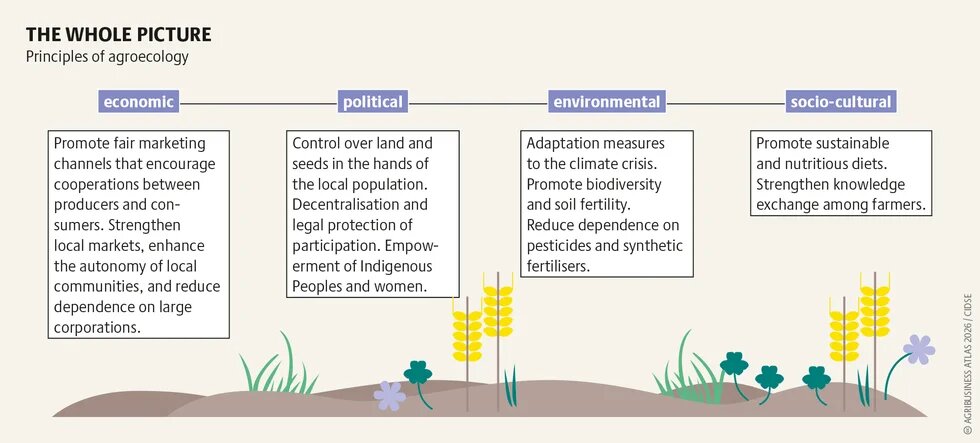
Led by the Alliance for Food Sovereignty in Africa (AFSA) with members and partners across the continent, the My Food is African campaign seeks to make that reality more visible. It is about far more than celebrating African cuisine; it also forms part of AFSA's broader effort to promote agroecology, food sovereignty, territorial markets, and locally managed seed systems. At its core, the campaign challenges the idea that African food systems only become valuable when they grow increasingly industrial, standardised, and integrated into global commodity chains. Instead, those involved in the campaign argue that local food systems already generate economic, ecological, and nutritional value, even if mainstream agricultural policy often fails to recognise or measure that value properly.
The argument gains even more force when placed against current trends. Africa's annual food import bill now stands at roughly 50 billion US dollars, a figure often cited as evidence of growing dependence on external supplies of key staples. At the same time, changing urban diets are increasing exposure to ultra-processed foods and diet-related disease. According to the WHO African Region's 2024 report, around 1.6 million people aged between 30 and 70 die prematurely each year from major non-communicable diseases. These figures do not suggest that imports or supermarket expansion are inherently harmful. They do, however, challenge the assumption that a more globalised food system automatically improves diets, resilience, or public health.
For that reason, reclaiming African food systems is about more than culture alone. Territorial markets tend to spread participation across many actors, including smallholders, traders, transporters, processors, and consumers. Industrial food systems, by contrast, often concentrate power in fewer corporations, rely on long supply chains and input-intensive models that increase dependence on imported seeds, fertilisers, packaging, and retail infrastructure. The point is not to romanticise local markets or dismiss formal retail systems altogether. The real question is which systems are more resilient, more inclusive, and more accountable to the people who actually produce and buy food every day.
From this perspective, AFSA and allied networks are working to strengthen territorial markets rather than treating them as relics of the past. That includes support for agroecological entrepreneurship, local procurement, cross-border trade initiatives, food festivals, collaborations with chefs, and campaigns promoting healthy local foods. These activities may appear modest beside large-scale industrial investment, but they address a basic policy failure: systems that already feed millions are still expected to survive without the infrastructure, legal recognition, and public investment routinely granted to export-oriented or corporate food chains.
The future of African food systems just as in other regions will not be shaped by technology or global market integration alone. It will also depend on whether governments, researchers, and development organisations are willing to recognise what already exists: territorially rooted food systems that continue to feed large populations, sustain livelihoods, and pass on cultural knowledge under difficult conditions. The evidence does not suggest that these systems are perfect. It does suggest that they are indispensable, and that policy frameworks treating them as informal leftovers rather than foundational institutions risk misreading how food security actually works across much of the continent.

A handful of corporations dominate our food system, setting prices, profiting from crises, and driving relentless pressure on the environment, farmers, and consumers alike. The Agribusiness Atlas 2026 traces how this concentration of power took hold, and charts the political pathways toward a fairer food system built around the common good.
