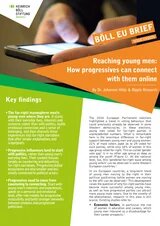
In the 2024 European elections, young men voted for far-right parties more than young women did. A new study of influencers in France, Germany and the UK shows how far-right creators start from young men's everyday interests and concerns, and what progressive actors can do to reach, listen and engage better.
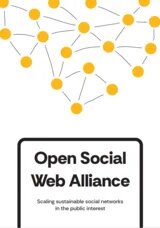
This policy paper identifies five key challenges for scaling a public-interest social web: infrastructure, governance, funding, attractiveness, and public mandate. It outlines a roadmap for overcoming these challenges and building the Open Social Web Alliance into a relevant force within months — starting in Germany.
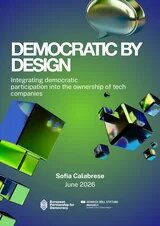
Who currently owns tech? Are our digital spaces really participatory? A few usual suspects like Meta and Google currently dominate the market, de facto controlling democratic discourse online, even though no one really elected them. How can we fix this?
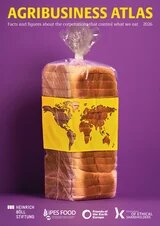
A handful of corporations dominate our food system, setting prices, profiting from crises, and driving relentless pressure on the environment, farmers, and consumers alike. The Agribusiness Atlas 2026 traces how this concentration of power took hold, and charts the political pathways toward a fairer food system built around the common good.
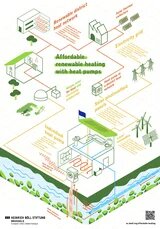
Europe cannot afford fossil fuels for heating our homes. The good news: We have an abundant potential of domestic renewable energy sources. The infographic shows how heat pumps replace fossil fuels. They can run on renewable power from the electricity grid or from solar photovoltaic panels on the rooftop and tap into the different renewable heat sources such as ambient air, geothermal heat or warm waste water. Like other renewable heat suppliers, they can also feed into district heat networks that connect different consumers. We explain which solutions make these technologies accessible for all.
This EU mandate's simplification agenda has prioritised deregulation over sustainability and policy coherence. Simplification can boost competitiveness and climate outcomes, but the method matters. Ahead of the 2026 Governance Regulation revision, this briefing calls for a 'goal oriented' approach instead.
How can the EU safeguard its foreign policy capacity to act despite national vetoes? In his new IEP Policy Paper in cooperation with the Heinrich-Böll-Stiftung, Daniel Hegedüs explores how qualified majority voting could enable enhanced cooperation among member states without Treaty amendment.
A report prepared by the Institute of Public Affairs in cooperation with the Heinrich Böll Foundation presents key findings of a new public opinion survey conducted simultaneously in Poland, Germany, and France. The study explores how citizens in the three countries perceive the significance and role of the Weimar Triangle. The findings point to clear public support for further strengthening cooperation among the three countries. At the same time, they highlight its greatest weakness: the Weimar Triangle remains relatively little known and has yet to become a visible part of citizens’ everyday experience.
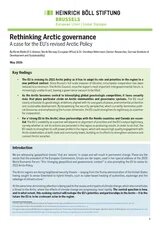
The Arctic is at a geopolitical crossroads. Russia's war on Ukraine has paralysed the Arctic Council, Trump's ambitions over Greenland are fracturing transatlantic trust, and the climate crisis risks being pushed off the political agenda. As the region's governance vacuum deepens, the EU faces a pivotal choice: seize the moment or be sidelined. This policy paper sets out how the EU can build a credible, legitimate role in a rapidly shifting Arctic.
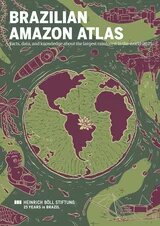
The Brazilian Amazon Atlas can serve as a gateway to knowledge of the region and as an instrument for learning about the complex relationships that make up this immense territory. From this, we hope that it can foster debates and dialogues, as well as inspire solutions to the different challenges, in order to encourage a sustainable and self-determined future for the Amazon and its peoples.
The Soil Atlas 2024 not only highlights the consequences of the global loss of fertile soil, but also shows the potential of sustainable and fair land use for climate protection and biodiversity.
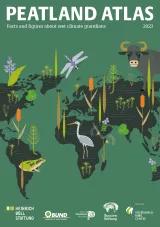
The Peatland Atlas 2023 highlights the consequences of the destruction of these unique habitats, but also the potential of wet peatlands for mitigating climate change.
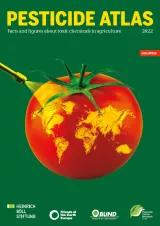
The Pesticide Atlas raises awareness, provides comprehensive information and fosters nuanced debate around agrochemicals used for pest control. It sheds light on different aspects from scientific research, including the impact of pesticides on soils, waters, biodiversity and health, and highlights alternative models with a more stringent implementation of integrated pest management where synthetic substances are only a last resort option.
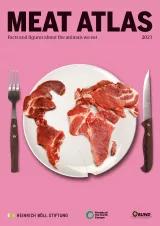
There is hardly any other food that pollutes our environment and the climate as badly as meat. However, no government in the world currently has a concept of how meat consumption and production can be significantly reduced. But if the sector continues to grow as it has up to now, almost 360 million tons of meat will be produced and consumed worldwide in 2030. With ecological effects that are hard to imagine.
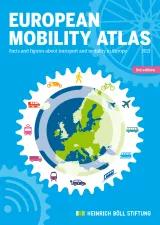
Sustainable transport and mobility are key to tackle the climate crisis and to achieve the targets of the European Green Deal. However, transport today accounts for nearly 30 percent of the CO₂ emissions within the European Union. How can the EU reduce its transport and mobility emissions while connecting citizens, creating green jobs and leading the innovation in the sector?
Insects are a fundamental part of the basis of life in our world. The extent of insect mortality in Germany, in Europe and worldwide is therefore dramatic. The Insect Atlas 2020 explains why the industrial agricultural industry in particular is threatening the habitats of insects so massively, what ways out are possible, and many other exciting aspects. It provides data and facts about beneficial and harmful insects in agriculture, formulates criticism of the overly hesitant policy to protect them.
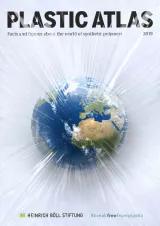
Plastic is ubiquitous: we use it for life-saving medical devices, clothing, toys and cosmetics; we use it in agriculture and industry. But we also know the growing risk of plastic waste in the environment, landfills and the oceans. We have only just begun to understand the huge dimensions of this crisis. A change of course requires in-depth knowledge of the causes, interests, responsibilities and effects of the plastics crisis. The Plastics Atlas 2019 wants to offer exactly that in 19 chapters.
Facts and Figures on EU Farming Policy: No other economic activity is so closely interwoven with the human and natural environment as is agriculture. If farming changes, so too the ecological and social systems that it hosts must change. The Agriculture Atlas shows how closely Europe’s agriculture is intertwined with our lives and our living space and pushes for a better, fundamentally different set of agricultural policies.
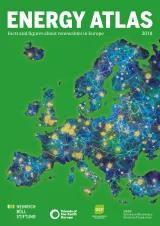
The European Energy Atlas shows a clear alternative: It not only provides a compass on the different energy discussions in different Member States but also reveals how a Europeanization of the energy transition will be the more efficient and cost-effective option for all Europeans.
Without the ocean there would be no life on our planet. But the future of this unique ecosystem faces a grave threat today. The Ocean Atlas 2017 delivers with its 18 contributions and 50 graphics the relevant facts and figures about the ocean.
Industrial agriculture is responsible for both colossal environmental and climate damage as well as global injustice. It is high time for a socially and politically oriented regulation of the agrifood industry. We hope that this atlas will stimulate a broad-based social debate on this vital topic.
Through misuse, we lose 24 billion tonnes of fertile soil every year. For the International Year of Soils in 2015, this Atlas shows, why the soil should concern us all. Jointly published by the Heinrich Böll Foundation and the Institute for Advanced Sustainability Studies.
Our Coal Atlas contains the latest facts and figures on the use of coal and its environmental and social consequences. With more than 60 detailed graphics, the atlas illustrates the coal industry’s impact on nature, health, labour, human rights and politics.