The Europe Sustainable Development Report 2026 (ESDR 2026) provides an independent quantitative assessment of the progress of the European Union, its member states and partner countries on the SDGs. The seventh edition of the ESDR shows that progress on SDGs has stalled in Europe, with declining political prioritization of the SDGs by EU leadership.
This policy brief explores the long-standing divergences in Europe and India’s approach to multilateral governance—rooted in historical experience and interest-based considerations—to better understand the current moment and identify arenas of promise
The EU aims to be the first climate-neutral continent by 2050 and cut emissions 55 % by 2030. But it still hasn’t set the 2035 and 2040 targets required by the Paris Agreement and its own Climate Law. This publication answers 10 key questions and offers five proposals for a “net-zero package” to strengthen and build on the current Fit-for-55 measures.
A majority of citizens in Germany have a positive view of the new federal government‘s pledge for a stronger leadership role in the EU, but clearly advocate for doing so in a cooperative manner. These findings come from the latest edition of our long-term study 'Actually European!?' on Germany’s role in the EU.
The majority of EU Member States do not have any formal China strategy papers. Some EU Member States and specific government ministries have adopted internal China strategies and guidelines that have not been officially released to the public. Commonly referred to as ‘China strategies’, these documents outline national positions on China, rather than concrete strategies for managing bilateral relations. Jacob Mardell mapped out the state of play of these strategies in EU27, UK and Switzerland.
The Europe Sustainable Development Report 2025 provides an independent quantitative assessment of the progress of the European Union, its member states and partner countries towards the Sustainable Development Goals. This sixth edition identifies SDG priorities in a context where the new EU leadership, including the European Commission, Parliament and Council of the EU, has recently been established for 2024-2029 mandate.
Will the EU-US Trade and Technology Council shape a resilient future or succumb to geopolitical rifts? This in-depth exploration of scenarios, challenges, and opportunities for transatlantic collaboration on trade, tech, and climate action outlines possible futures.
For more than half a century, the European Union's agricultural policy has focussed primarily on increasing agricultural productivity and the cost-effective production of food. This policy paper provides recommendations for action that are largely possible without amending the EU treaties.
The European Union has many candidates for membership. It is currently conducting negotiations with Albania, North Macedonia, Ukraine, Moldova and Bosnia and Herzegovina. However, the accession processes are complicated. The current policy paper on the reform debate analyses the arguments for and against a rapid enlargement of the EU and provides recommendations for policy-makers.
The EU's reactions to the current challenges in the areas of security and trade policy highlight that a resolute and coherent common European foreign policy depends on the political will of Member States and their willingness to overcome their differences. The aim must be for Europeans to jointly consider their international commitment across different policy areas and act accordingly in a strategic manner. But the institutional reforms of the past have not provided the necessary push forward. In this sense, the recommendations for action in this paper are to be understood primarily as a call to Member States to make better use of the existing scope for action within the EU treaties.
Based on the 2024 political guidelines and mission letters to the new European Commissioners, the EU’s approach towards democracy seems to have shifted from a focus on democratic resilience towards democratic security. After a thorough examination of the EU’s 2019-2024 democracy agenda, this study presents recommendations for the next legislative cycle.
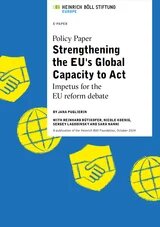
This policy paper makes some suggestions as to how reforms could be possible with and without treaty changes and how the EU can preserve its future viability.
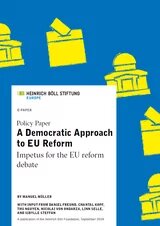
War in Europe, the worsening climate crisis, Europe's position in the global power structure: the EU is facing historic challenges. The European elections in June 2024 will decide what happens next. Current surveys see right-wing populist parties on the rise. They stir up fears about the future and stir up sentiment against Brussels without themselves having answers to the problems of our time. But we need positive and courageous ideas for Europe.
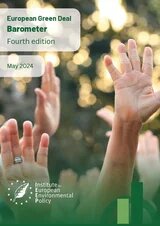
The fourth edition of the European Green Deal Barometer, the annual survey by the Institute for European Environmental Policy (IEEP), gathers sustainability experts’ views on the progress of the European Green Deal’s implementation. The 2024 EU elections are considered by sustainability experts to negatively impact the European Green Deal implementation. However, these experts believe the agenda will be maintained by the new European Commission.
The climate crisis and energy price explosion have made it clear: the EU cannot afford its dependency on fossil fuels anymore. How to deal with these enormous challenges? Our 100% Renewable Action Plan for the European Commission 2024-2029 describes what needs to happen to harvest the benefits of renewables.
The sixth edition of the long-term study Actually European!? examines how the German population views the European elections and what they expect from their government at the EU level, ahead of the 6-9 June 2024 European elections.
In his book, author Vedran Horvat takes a personal journey through the last two decades of politics in the Western Balkans and sheds light on the potential of green politics under extremely difficult conditions.
The Europe Sustainable Development Report 2023/24 (5th edition) provides an independent quantitative assessment of the progress by the European Union, its member states and partner countries towards the Sustainable Development Goals (SDGs).
This study shows that climate change requires central bank intervention and that – in anticipation of climate risks – the ECB can and should double down on its pledges to green central bank activities. Against this background, the report identifies numerous concrete policy options, from enhancing green tilting approaches in asset purchasing programmes to offering favourable refinancing terms to banks engaged in green lending.