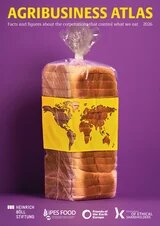
A handful of corporations dominate our food system, setting prices, profiting from crises, and driving relentless pressure on the environment, farmers, and consumers alike. The Agribusiness Atlas 2026 traces how this concentration of power took hold, and charts the political pathways toward a fairer food system built around the common good.
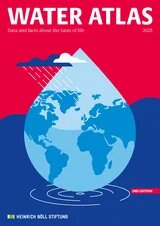
The English edition of the Water Atlas, published by Heinrich-Böll-Stiftung, presents the complexity and urgency of global water issues in a visually compelling, accessible format. It provides facts, trends, case studies, and political context to inform public discourse and shape policy. From the unequal distribution of water and industrial pollution to climate-linked water insecurity and geopolitical tensions, the Atlas aims to sharpen understanding and support action toward more sustainable and equitable water governance.
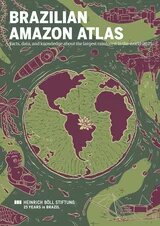
The Brazilian Amazon Atlas can serve as a gateway to knowledge of the region and as an instrument for learning about the complex relationships that make up this immense territory. From this, we hope that it can foster debates and dialogues, as well as inspire solutions to the different challenges, in order to encourage a sustainable and self-determined future for the Amazon and its peoples.
The Soil Atlas 2024 not only highlights the consequences of the global loss of fertile soil, but also shows the potential of sustainable and fair land use for climate protection and biodiversity.
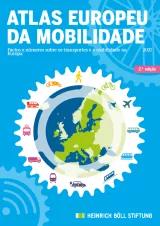
A edição portuguesa do Atlas Europeu da Mobilidade 2021 da Fundação Heinrich-Böll-Stiftung, em cooperação com a European Green Foundation, analisa os principais factos e números sobre transportes e mobilidade na Europa, contribuindo para os esforços em prol de uma mobilidade sustentável e justa. Os seus capítulos são dedicados a diferentes dimensões e áreas políticas relacionadas com os transportes e a mobilidade: caminhos-de-ferro, ciclismo, digitalização, clima, Covid-19 e muito mais.
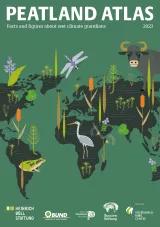
The Peatland Atlas 2023 highlights the consequences of the destruction of these unique habitats, but also the potential of wet peatlands for mitigating climate change.
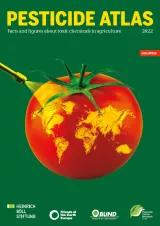
The Pesticide Atlas raises awareness, provides comprehensive information and fosters nuanced debate around agrochemicals used for pest control. It sheds light on different aspects from scientific research, including the impact of pesticides on soils, waters, biodiversity and health, and highlights alternative models with a more stringent implementation of integrated pest management where synthetic substances are only a last resort option.
Este documento es un complemento a la versión en español del “Atlas Europeo de la Movilidad 2021” de la Fundación Heinrich Böll y la Fundación Verde Europea, en cooperación con la Fundación Transición Verde y la Fundació Nous Horitzons.
El transporte y la movilidad sostenibles son fundamentales para hacer frente a la crisis climática y alcanzar los objetivos del Pacto Verde Europeo. Sin embargo, el transporte hoy representa casi el 30 por ciento de las emisiones de CO₂ dentro de la Unión Europea. ¿Cómo puede la UE reducir sus emisiones de transporte y movilidad al mismo tiempo que conecta a los ciudadanos, crea empleos verdes y lidera la innovación en el sector?
Il trasporto e la mobilità sostenibili sono fondamentali per affrontare la crisi climatica e raggiungere gli obiettivi del Green Deal europeo. Tuttavia, i trasporti oggi rappresentano quasi il 30% delle emissioni di CO₂ all'interno dell'Unione europea. In che modo l'UE può ridurre le emissioni dei trasporti e della mobilità mettendo in contatto i cittadini, creando posti di lavoro verdi e guidando l'innovazione nel settore?