The Europe Sustainable Development Report 2022 is the fourth edition of our independent quantitative report on the progress of the European Union, its member states and partner countries towards the Sustainable Development Goals (SDGs). This year's report is a special edition in support of the upcoming EU Voluntary Review and the next United Nations' Heads of State Summit on the SDGs. To that end, this year's edition also presents 10 contributions from scientists and practitioners on ways to strengthen the EU's SDG leadership at home and internationally.
As we write this in March of 2022, our review of the year 2021 is overshadowed by Russia’s brutal war of aggression against Ukraine. Because of this, not only foreign policy, but also domestic politics have now entered a new era.
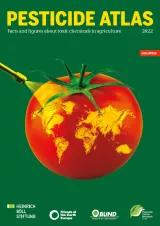
The Pesticide Atlas raises awareness, provides comprehensive information and fosters nuanced debate around agrochemicals used for pest control. It sheds light on different aspects from scientific research, including the impact of pesticides on soils, waters, biodiversity and health, and highlights alternative models with a more stringent implementation of integrated pest management where synthetic substances are only a last resort option.
The World Nuclear Industry Status Report 2022 (WNISR2022) assesses the status and trends of the international nuclear industry. It provides a comprehensive overview of nuclear power plant data, including information on operation, production, construction, and decommissioning. It assesses the status of new-build programs in existing as well as in potential newcomer nuclear countries. The report also compares the development of nuclear power and renewable energy globally.
The EU must put an end to unabated fossil gas use by 2050 at the latest to comply with its climate neutrality objective. To stay within the Paris Agreement target of 1.5°C, the use of unabated fossil gas would have to end significantly earlier – by 2035. This report outlines the implications of this challenge for the management of the energy transition in a way that rapidly phases out Russian gas imports, protects security of supply and energy-poor consumers as well as the climate.
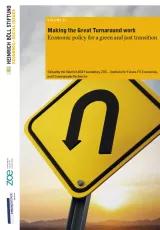
This publication aims at contributing to the emergence of a transformative economic thinking, integrating environmental, social, and economic dimensions, after the wreckage of neoliberal economic thought that clearly has reached its date of expiry. It is the product of a collaboration of the Heinrich-Böll-Stiftung, the ZOE Institute for Future-Fit Economies, and Finanzwende Recherche.
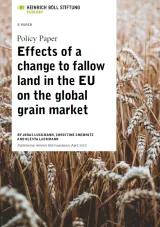
Current discussions about growing food on fallow land are missing the point: the price-reduction effect would be very low. This publication argues that it would be better to provide financial aid to the most vulnerable countries in the Global South.
Ukraine was among the first EU neighbours to announce their readiness to contribute to the European Green Deal and a high-level EU-Ukraine dialogue on this topic has already commenced. However, what are the contours of Ukraine’s engagement with the EGD and how will it move forward?
The analytical commentaries of this issue discuss the prospects for a just green transition in the Western Balkan countries and their particular contexts of structural injustices in the societies and transition legacies. The fundamental economic and technological changes for a decarbonisation of the widely coal dependent economies in the region need to be accompanied not only by another attitude to nature and biodiversity but also by a new set of social relationships and innovations in governance and civic participation.
Este documento es un complemento a la versión en español del “Atlas Europeo de la Movilidad 2021” de la Fundación Heinrich Böll y la Fundación Verde Europea, en cooperación con la Fundación Transición Verde y la Fundació Nous Horitzons.