In the 2024 European elections, young men voted for far-right parties more than young women did. A new study of influencers in France, Germany and the UK shows how far-right creators start from young men's everyday interests and concerns, and what progressive actors can do to reach, listen and engage better.
This policy paper identifies five key challenges for scaling a public-interest social web: infrastructure, governance, funding, attractiveness, and public mandate. It outlines a roadmap for overcoming these challenges and building the Open Social Web Alliance into a relevant force within months — starting in Germany.
Who currently owns tech? Are our digital spaces really participatory? A few usual suspects like Meta and Google currently dominate the market, de facto controlling democratic discourse online, even though no one really elected them. How can we fix this?
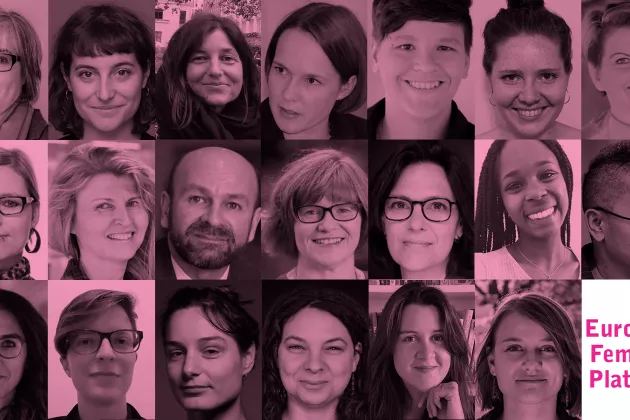
This report by Forbidden Colours argues that the EU’s Gender Equality Strategy 2020–2025 was designed for a political moment that has since shifted dramatically. Although it secured important legal advances, it failed to anticipate the rise of coordinated anti-rights movements challenging fundamental freedoms across Europe. As the EU prepares its 2026–2030 Strategy, a decisive shift is needed: gender equality must be anchored as a core pillar of democratic resilience, security and rule-of-law protection – not treated as a standalone social policy.
The United Arab Emirates has become a major investor in the Western Balkans. With enlargement back on the agenda, the EU must ensure that foreign capital meets rather than undermines its governance standards.
This analysis argues that democracy should feature more prominently in the Global Europe pillar of the Multiannual Financial Framework (MFF), both in terms of objectives and of instruments. It then locates democracy among the European Union’s external strategic objectives, arguing for a more central role as democratic governance has the potential to contribute to other policy objectives such as security and economic development.