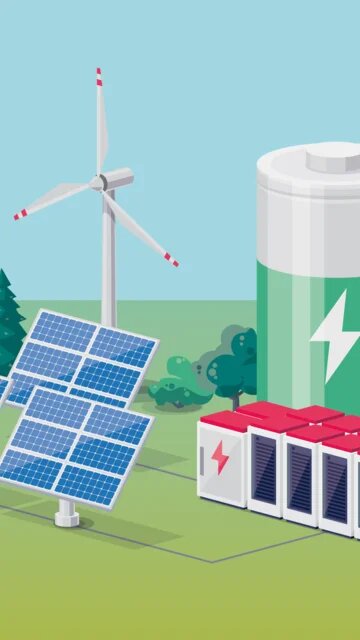
Citizens in the EU still depend largely on fossil gas and other fossil fuels to keep their homes warm. After the massive increase of fossil gas prices in 2022, another global fossil fuel price crisis unfolds. There are clean and affordable domestic alternatives for heating, such as solar thermal energy, sustainable bioenergy and geothermal and ambient energy. Using renewable electricity for heating is the solution for cutting both emissions and households’ energy bills. The electric heat pump is the key technology, using electricity to pump up the temperature level of ambient or geothermal heat.
See more upcoming events

 Watch recording of past events on our YouTube channel.

Read all our latest articles
democratic-by-design_page_01.png

Democratic by design

Report
Who currently owns tech? Are our digital spaces really participatory? A few usual suspects like Meta and Google currently dominate the market, de facto controlling democratic discourse online, even though no one really elected them. How can we fix this?
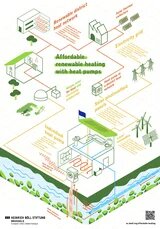
Affordable renewable heating with heat pumps

Affordable renewable heating with heat pumps

Infographic
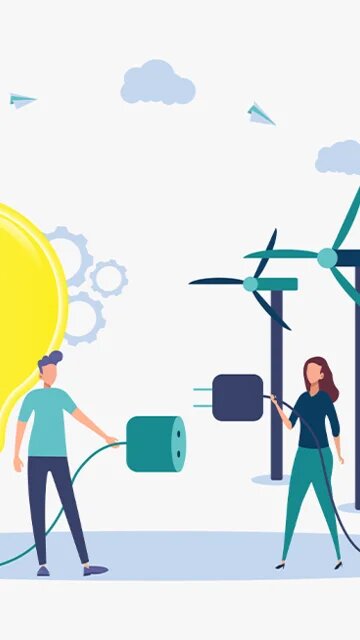
Europe cannot afford fossil fuels for heating our homes. The good news: We have an abundant potential of domestic renewable energy sources. The infographic shows how heat pumps replace fossil fuels. They can run on renewable power from the electricity grid or from solar photovoltaic panels on the rooftop and tap into the different renewable heat sources such as ambient air, geothermal heat or warm waste water. Like other renewable heat suppliers, they can also feed into district heat networks that connect different consumers. We explain which solutions make these technologies accessible for all.

More cooperation, tangible results

A report prepared by the Institute of Public Affairs in cooperation with the Heinrich Böll Foundation presents key findings of a new public opinion survey conducted simultaneously in Poland, Germany, and France. The study explores how citizens in the three countries perceive the significance and role of the Weimar Triangle. The findings point to clear public support for further strengthening cooperation among the three countries. At the same time, they highlight its greatest weakness: the Weimar Triangle remains relatively little known and has yet to become a visible part of citizens’ everyday experience.
defending-equality-in-an-age-of-democratic-decline-final_page_01.png

Defending Equality in an Age of Democratic Decline

Report
This report by Forbidden Colours argues that the EU’s Gender Equality Strategy 2020–2025 was designed for a political moment that has since shifted dramatically. Although it secured important legal advances, it failed to anticipate the rise of coordinated anti-rights movements challenging fundamental freedoms across Europe. As the EU prepares its 2026–2030 Strategy, a decisive shift is needed: gender equality must be anchored as a core pillar of democratic resilience, security and rule-of-law protection – not treated as a standalone social policy.
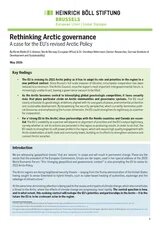
rethinking-arctic-governance_page_1.png

Rethinking Arctic governance

Policy paper
The Arctic is at a geopolitical crossroads. Russia's war on Ukraine has paralysed the Arctic Council, Trump's ambitions over Greenland are fracturing transatlantic trust, and the climate crisis risks being pushed off the political agenda. As the region's governance vacuum deepens, the EU faces a pivotal choice: seize the moment or be sidelined. This policy paper sets out how the EU can build a credible, legitimate role in a rapidly shifting Arctic.

#StandWithUkraine

We declare our full solidarity with Ukraine. We stand by the side of our Ukrainian partners and colleagues, and at the same time also by the side of our partners in Russian civil society who are under harsh state repression.

Read our statement

Heinrich-Böll-Stiftung European Union​
Rue du Luxembourg, 47-51
BE-1050 Brussels, Belgium
Map | Staff

Phone: + 32 (0)2 743 41 00
Fax: + 32 (0)2 743 41 09
E-mail: info [at] eu.boell.org