This Böll EU Brief critically assesses the prospects of small modular reactors (SMRs) in Europe. It finds that most SMR designs remain in early development, lack regulatory approval in the EU, and are unlikely to deliver electricity at scale before 2050. Technical, economic and political challenges – including high costs, unresolved waste management, proliferation risks and heterogeneous designs – undermine claims of rapid deployment and cost reductions. The authors conclude that prioritising renewables, storage and electrification is a more credible pathway for timely decarbonisation.
Europe’s electricity grid planning was designed for a slower, fossil-based energy system. Today, rapid renewable deployment, rising electricity demand and the emergence of hydrogen call for a new institutional framework. This factsheet outlines how forward-looking, coordinated planning can help achieve climate neutrality by 2050. It recommends that Member States develop spatial energy plans, that stronger unbundling rules prevent conflicts of interest, and that an Independent EU Energy System Planner be created to improve cross-border coordination and efficiency.
Heat pumps can reduce emissions, cut fossil fuel use and lower energy bills – but they remain unaffordable for many Europeans. High upfront costs and complex installations slow adoption, leaving low-income households behind. Could social leasing and on-bill financing make clean heating accessible to all?
As Europe electrifies heating, transport, and industry, its electricity grids are facing an unprecedented transformation. Meeting the growing and increasingly complex demand will require hundreds of billions in new investments – costs that risk falling heavily on consumers. This brief examines how better network tariff design can balance fairness and efficiency, reward flexibility, and make Europe’s energy transition more just and affordable for everyone.
Europe’s clean energy transition is accelerating – but so is public resistance in some regions. While most Europeans support renewables, projects often face local opposition when communities feel excluded or see few direct benefits. This brief explores how renewable energy projects can strengthen trust and public acceptance by sharing value locally, creating jobs, and showing that the transition is not only green, but fair.
Europe’s homes and buildings sit at the intersection of social wellbeing, climate resilience, and energy security. Yet inefficiency and rising costs are undermining their role as safe, affordable spaces. This brief explores how the upcoming European Affordable Housing Plan and European Citizens Energy Package can unlock the potential of citizen-driven renovation to build resilient, renewable-powered living environments for all.
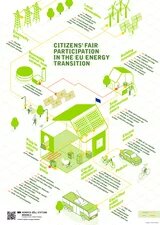
The energy transition can help people save money through solar panels, energy-efficient homes and electric transport. But not everyone can afford these new technologies. The EU has rules and support to make the transition fair for everyone. Our infographic shows how people can benefit and protect themselves from rising fossil fuel prices.
The World Nuclear Industry Status Report 2025 reviews global nuclear trends, covering reactor operation, construction and decommissioning, with a focus on major nuclear countries and Taiwan’s completed phaseout. It analyses newbuild programmes, Small Modular Reactors, nuclear–renewables compatibility, and Russia’s nuclear interdependencies. Dedicated chapters assess Fukushima’s ongoing challenges and the status of 218 closed reactors.
The World Nuclear Industry Status Report 2024 (WNISR2024) assesses on 513 pages the status and trends of the international nuclear industry. It provides a comprehensive overview of nuclear power plant data, including information on operation, production, fleet age, and construction. The WNISR discusses the status of newbuild programs in existing as well as in potential newcomer nuclear countries.
As the European Green Deal enters its delivery phase, a fair, participatory energy transition is vital. This report explores tools to ensure that EU policies balance environmental sustainability with social equity, fostering resilience and inclusion.
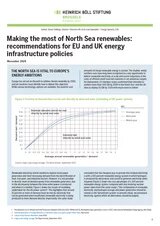
Europe has set out on the path to achieve climate neutrality by 2050, and all countries must identify how to deliver this objective. While various technology options are available, the need for vast amounts of cheap renewable energy is certain. The shallow, windy northern seas have long been recognised as a key opportunity to deliver renewable electricity at scale and recent reductions in the costs of offshore wind have led countries to set ambitious targets for deployment.