Europe’s electricity grid planning was designed for a slower, fossil-based energy system. Today, rapid renewable deployment, rising electricity demand and the emergence of hydrogen call for a new institutional framework. This factsheet outlines how forward-looking, coordinated planning can help achieve climate neutrality by 2050. It recommends that Member States develop spatial energy plans, that stronger unbundling rules prevent conflicts of interest, and that an Independent EU Energy System Planner be created to improve cross-border coordination and efficiency.
Heat pumps can reduce emissions, cut fossil fuel use and lower energy bills – but they remain unaffordable for many Europeans. High upfront costs and complex installations slow adoption, leaving low-income households behind. Could social leasing and on-bill financing make clean heating accessible to all?
As Europe electrifies heating, transport, and industry, its electricity grids are facing an unprecedented transformation. Meeting the growing and increasingly complex demand will require hundreds of billions in new investments – costs that risk falling heavily on consumers. This brief examines how better network tariff design can balance fairness and efficiency, reward flexibility, and make Europe’s energy transition more just and affordable for everyone.
Europe’s clean energy transition is accelerating – but so is public resistance in some regions. While most Europeans support renewables, projects often face local opposition when communities feel excluded or see few direct benefits. This brief explores how renewable energy projects can strengthen trust and public acceptance by sharing value locally, creating jobs, and showing that the transition is not only green, but fair.
Europe’s homes and buildings sit at the intersection of social wellbeing, climate resilience, and energy security. Yet inefficiency and rising costs are undermining their role as safe, affordable spaces. This brief explores how the upcoming European Affordable Housing Plan and European Citizens Energy Package can unlock the potential of citizen-driven renovation to build resilient, renewable-powered living environments for all.
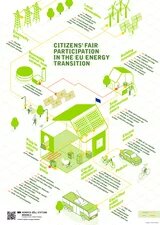
The energy transition can help people save money through solar panels, energy-efficient homes and electric transport. But not everyone can afford these new technologies. The EU has rules and support to make the transition fair for everyone. Our infographic shows how people can benefit and protect themselves from rising fossil fuel prices.
The English edition of the Water Atlas, published by Heinrich-Böll-Stiftung, presents the complexity and urgency of global water issues in a visually compelling, accessible format. It provides facts, trends, case studies, and political context to inform public discourse and shape policy. From the unequal distribution of water and industrial pollution to climate-linked water insecurity and geopolitical tensions, the Atlas aims to sharpen understanding and support action toward more sustainable and equitable water governance.
Across Europe, cities are grappling with an intensifying housing crisis that affects a wide spectrum of urban residents, from the most vulnerable to essential workers and middle-income earners. Increasing numbers of residents face eviction, leading to higher rates of homelessness in urban centres. This handbook by Eurocities presents a wide range of practical approaches in 10 European cities addressing key housing challenges, highlighting strategies that combine affordability, social inclusion, and sustainability.
Amsterdam, Barcelona, Bonn, Ghent, Gotheburg, Lyon Metropole, Milan, Rome, Vienna, Vilnius
Argentina is pushing hard to be labelled “low risk” under the EU Deforestation Regulation (EUDR) – despite alarming deforestation in the Chaco forest and scant involvement of local communities. A new analysis by REDAF warns that the current monitoring system, driven by powerful agribusiness interests, could underestimate forest loss, overrate compliance in soy and beef production, and mask human rights abuses.
The World Nuclear Industry Status Report 2025 reviews global nuclear trends, covering reactor operation, construction and decommissioning, with a focus on major nuclear countries and Taiwan’s completed phaseout. It analyses newbuild programmes, Small Modular Reactors, nuclear–renewables compatibility, and Russia’s nuclear interdependencies. Dedicated chapters assess Fukushima’s ongoing challenges and the status of 218 closed reactors.