El transporte y la movilidad sostenibles son fundamentales para hacer frente a la crisis climática y alcanzar los objetivos del Pacto Verde Europeo. Sin embargo, el transporte hoy representa casi el 30 por ciento de las emisiones de CO₂ dentro de la Unión Europea. ¿Cómo puede la UE reducir sus emisiones de transporte y movilidad al mismo tiempo que conecta a los ciudadanos, crea empleos verdes y lidera la innovación en el sector?
Il trasporto e la mobilità sostenibili sono fondamentali per affrontare la crisi climatica e raggiungere gli obiettivi del Green Deal europeo. Tuttavia, i trasporti oggi rappresentano quasi il 30% delle emissioni di CO₂ all'interno dell'Unione europea. In che modo l'UE può ridurre le emissioni dei trasporti e della mobilità mettendo in contatto i cittadini, creando posti di lavoro verdi e guidando l'innovazione nel settore?
The report covers a range of important aspects of Europe’s agri-food and rural policy, and includes some brand new content, while also bringing together the ARC2020's work during 2021. It includes an overview, an analysis of the initial European Commission recommendations, analyses of aspects of CAP in Germany (Green Architecture), Bulgaria (High Nature Value) Poland, Italy, precision farming, and finally CAP and EU relations to third countries.
The Europe Sustainable Development Report 2021 is the third edition of our independent quantitative report on the progress of the European Union and European countries towards Sustainable Development Goals (SDGs). The report was prepared by teams of independent experts at the Sustainable Development Solutions Network (SDSN) and the Institute for European Environmental Policy (IEEP).
On the basis of experience from working closely together with communities living near mining sites, the authors have identified various ways how to implement environmental due diligence on the ground. This can be useful both in drafting legislation and considering its practical implementation.
A continuing insistence on nuclear will be detrimental to our ability to power a Just Transition: while the jobs it creates are few and primarily for the highly skilled, its enormous costs will likely result in austerity policies.
The notion of geoengineering includes a wide array of technologies that seek to intervene in and alter earth systems on a large scale – a “technofix” to climate change. There are many reasons to be wary of these technologies. They do not address the underlying causes of climate change themselves, anthropogenic greenhouse gas emissions, thereby delaying the implementation of a transition away from fossil fuels. Moreover, as they are very pricy, they redirect funding and investments away from real climate solutions.
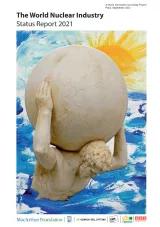
The World Nuclear Industry Status Report 2021 (WNISR2021) assesses the status and trends of the international nuclear industry, and contains several focus chapters, including a first assessment of Nuclear Power and Climate Change Resilience. A special Fukushima Status Report – 10 Years After provides an overview of ongoing onsite/offsite challenges, health impacts, judicial decisions, and cost estimates of the disaster. Chernobyl – 35 Years After the Disaster Began looks at advances in the cleanup and remaining challenges. For the first time, WNISR dedicates a chapter to the problem of Nuclear Power and Criminal Energy.
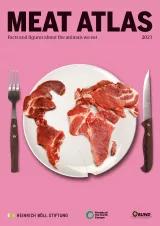
There is hardly any other food that pollutes our environment and the climate as badly as meat. However, no government in the world currently has a concept of how meat consumption and production can be significantly reduced. But if the sector continues to grow as it has up to now, almost 360 million tons of meat will be produced and consumed worldwide in 2030. With ecological effects that are hard to imagine.
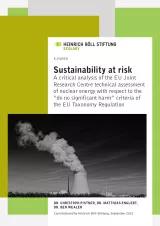
The findings of this joint policy brief challenge the flawed underlying assumptions of the original EU Joint Research Centre (JRC)’s assessment, published in April 2021, which concluded that nuclear energy is detrimental neither to people nor to the environment. These concern chiefly four aspects: the role of nuclear energy for power generation in the EU27; nuclear waste management; the risk assessment of nuclear technologies; and nuclear proliferation.