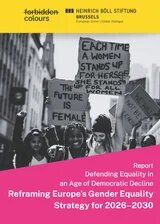
This report by Forbidden Colours argues that the EU’s Gender Equality Strategy 2020–2025 was designed for a political moment that has since shifted dramatically. Although it secured important legal advances, it failed to anticipate the rise of coordinated anti-rights movements challenging fundamental freedoms across Europe. As the EU prepares its 2026–2030 Strategy, a decisive shift is needed: gender equality must be anchored as a core pillar of democratic resilience, security and rule-of-law protection – not treated as a standalone social policy.
This study aims to take stock of the progress of the last decade, as well as identify remaining barriers and new opportunities for women CSO leaders in achieving systemic change in Europe. The key findings indicate a concerning trend of burnout among women leaders in the CSO sector, hindering their efforts to drive systemic change.
In this time of triple crises, the global community and its leaders face a turning point at a critical time for action. The choice is whether to continue with failed policies that have brought the world to this perilous juncture or to retool global economies and systems.
The study demonstrates the complexity of climate co-funding, the local obstacles in host countries, and the inadequacy of supervisory procedures. It also shows the importance of integrating climate change, human rights and gender equality policies into the development of geothermal projects and their enforcement at country level.
Linking human rights and a gender-responsive approach to climate actions, can avoid harmful unintended consequences and maximize social benefits of programmes and projects. This interim report provides a general assessment of how to effectively integrate human rights and gender equality as well as the broader SDG agenda into EU climate actions.