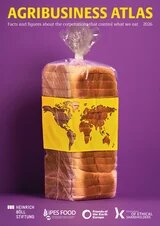
A handful of corporations dominate our food system, setting prices, profiting from crises, and driving relentless pressure on the environment, farmers, and consumers alike. The Agribusiness Atlas 2026 traces how this concentration of power took hold, and charts the political pathways toward a fairer food system built around the common good.
As the EU enters a new five-year cycle, its ambitious Green Deal targets and European Climate Law face growing uncertainty due to concerns over industrial competitiveness and economic growth. Additionally, backlash against the EU’s climate policies, fuelled by farmers’ protests, could hinder the promise of a just green transition. Yet, as the planet warms rapidly, climate change will continue to affect EU economic sectors, including agriculture and food. Greater climate variability and extremes will impact global food systems, posing supply chain challenges and heightening food insecurity. These trends highlight the need to invest in sustainable agri-food systems as part of climate mitigation and adaptation.
The project CAP Strategic Plans co-organised by ARC2020 with the Good Food Good Farming network is now completing its fourth year since its launch in 2020. 2023 can be seen as the end of a policy reform cycle and beginning of a new one for the Common Agricultural Policy (CAP).
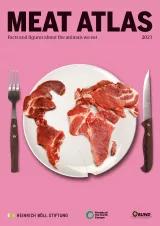
There is hardly any other food that pollutes our environment and the climate as badly as meat. However, no government in the world currently has a concept of how meat consumption and production can be significantly reduced. But if the sector continues to grow as it has up to now, almost 360 million tons of meat will be produced and consumed worldwide in 2030. With ecological effects that are hard to imagine.
The EU-Mercosur Free Trade Agreement (FTA) is designed to increase the flow of goods among countries. In addition to reducing tariffs and quotas on meat and other goods, it includes measures to streamline food safety approvals in ways that could result in lower standards.
Industrial agriculture is responsible for both colossal environmental and climate damage as well as global injustice. It is high time for a socially and politically oriented regulation of the agrifood industry. We hope that this atlas will stimulate a broad-based social debate on this vital topic.
This publication sheds light on the impacts of meat and dairy production, and aims to catalyse the debate over the need for better, safer and more sustainable food and farming.