

Agribusiness Atlas 2026
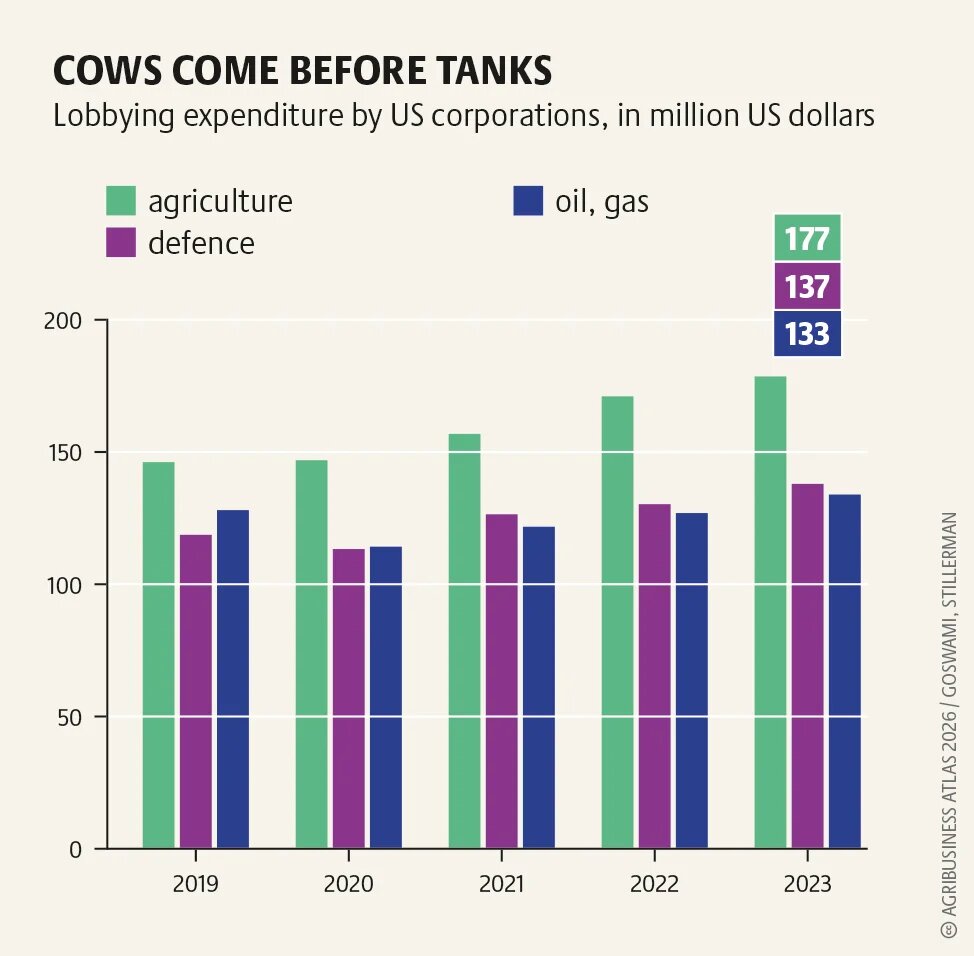
Corporations and their lobby groups often enjoy privileged access to European and national policymakers. In terms of budget, the number of lobbyists, and meetings with officials, they greatly outnumber trade unions and civil society organisations which defend the public interest.

With the launch of the European Union's (EU) Green Deal in 2019, the EU appeared willing to change course. It set binding targets to reduce pesticide and fertiliser use, while supporting farmers in transition. Yet the European Commission (EC) under President Ursula von der Leyen has undertaken a radical reversal in its second term, allowing corporations such as BASF and Bayer to shape the EU agenda. Europe is now facing an unprecedented push for deregulation that undermines democratic decision-making and threatens essential protections for public health and the environment.
Under the European Green Deal, the EU promised to transform agriculture toward sustainability. This included the Farm to Fork Strategy, which set a target to cut pesticide use in Europe by 50 per cent. But as soon as that target was proposed, the agrochemical industry launched an unprecedented lobbying offensive.
According to their own declarations in the EU Transparency Register, widely considered underestimates, just nine of the most active industry actors reported spending over 50 million euros between 2020 and 2023 while the pesticide reduction law was under debate. Leaked strategy documents revealed close coordination between the pesticide lobby group Croplife Europe and the farming and agribusiness lobby group Copa-Cogeca. Together with allied agribusiness groups, they commissioned a series of so-called impact studies claiming that reducing pesticide use, restore nature, and lowering meat production would threaten productivity and food security. In total, six industry-backed studies were funded by CropLife Europe, European Livestock Voice, Copa-Cogeca, Euroseeds, Coceral, the German Grain Club and even the US Department of Agriculture. Lobbyists widely used these studies to scare politicians through events and letters.
These studies were widely criticised by scientists and the EC's own research services for ignoring benefits of Farm to Fork proposals, excluding alternatives and relying on industry-shaped assumptions. Meanwhile, more than 6,000 independent scientists publicly supported pesticide reduction as essential for long-term food security. Nevertheless, the strategy worked. Negotiations were delayed, additional studies requested, and political pressure mounted. Right-wing Members of the European Parliament ultimately distorted the pesticide-reduction law so severely that it was withdrawn. Its collapse marked more than the loss of a single regulation; it set a precedent for dismantling core Green Deal commitments and signalled a broader political shift toward a new era of weakening regulations.
Now the corporate agenda has shifted from blocking new progressive legislation to dismantling existing safeguards. Under the banner of simplification and competitiveness, the EC has launched so-called Omnibus packages to revise EU laws. This represents a major rollback of protections. The proposal would move toward lifetime approvals for pesticides, ending mandatory safety reassessments every 10Ð15 years for most of them. In practice, this means most pesticides could remain on the market indefinitely unless authorities intervene under narrow conditions. The proposal also includes other changes, such as the extension of grace periods and weakening the ability of new independent science to trigger action.
The proposed changes reflect long-standing industry demands. The chemical industry spent decades shaping regulatory methodologies, promoting industry-friendly assessment standards and manufacturing doubt about evidence of harm. They argued that full dossier renewals are burdensome and divert regulatory capacity, and called for unlimited approvals based solely on limited literature monitoring. The Omnibus closely follows this script, driving a structural shift toward weakened oversight. Instead of reducing dependence on dangerous pesticides, the EU is stripping away safeguards and putting corporate profits above health, biodiversity, and long-term food resilience.
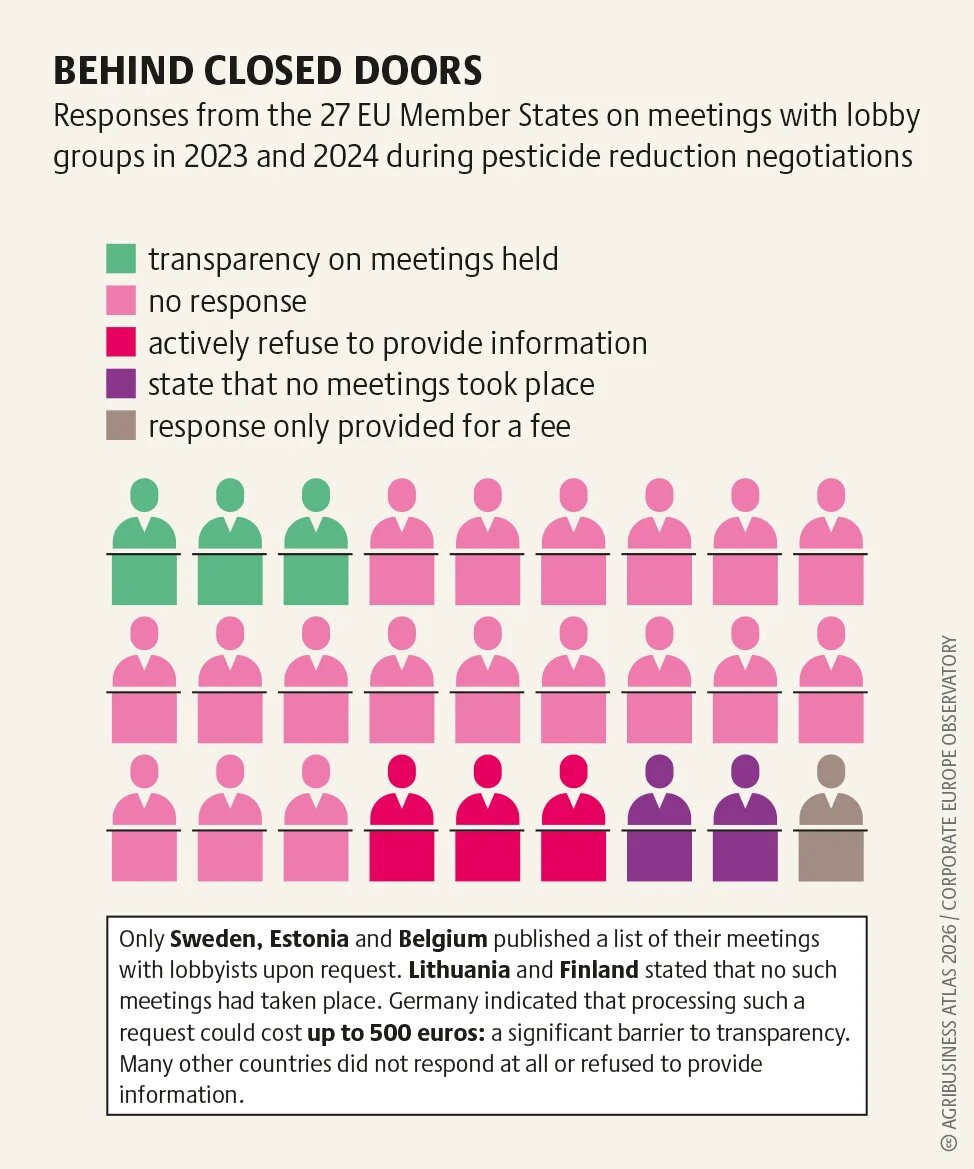
Studies indicate that the EC is leaving the door wide open to further industry influence, regardless of the price for society at large. The EC has held more than 1,300 meetings that mentioned the buzzwords simplification or Omnibus as a topic. Around 85 per cent of those meetings involved industry lobby groups. Why are corporations allowed to exert such extensive influence over rules meant to regulate them when this prevents societies from making sound decisions about their future? There are precedents for limiting such conflicts of interest. The UN restricts tobacco industry influence over public health policy. Climate advocates call for firewalls separating fossil fuel lobbyists from climate policymaking. To address the biodiversity crisis, protect public health, and secure a liveable future, governments must keep pesticide corporations out of political decision-making.
A handful of corporations dominate our food system, setting prices, profiting from crises, and driving relentless pressure on the environment, farmers, and consumers alike. The Agribusiness Atlas 2026 traces how this concentration of power took hold, and charts the political pathways toward a fairer food system built around the common good.
