Web dossier

Towards a European Energy Infrastructure Union

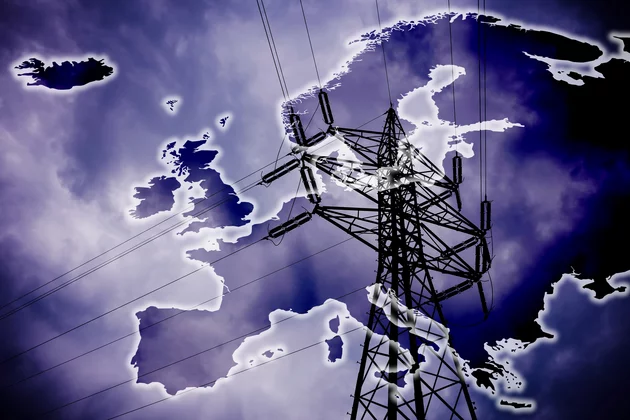
Our energy networks materialise the EU’s power of cross-border cooperation. Thanks to a well-connected grid, affordable electricity flows across the continent to households and businesses. And despite the Iberian blackout of 28 April 2025, outages remain extremely seldom and limited in time in within the EU. With the rise of a renewable, more decentralised energy system, Europe’s energy infrastructure also needs to adapt. The EU Action Plan for Grids and the EU Grids Package try to tackle the huge technical, administrative and financial bottlenecks that risk delaying the growth of wind and solar power. How can policymakers and industry advance the update of our grids? Could this task become the laboratory for a deeper integration of energy policies, evolving into a truly European Energy Infrastructure Union?
Publications
final_hbs_eu_skillings_energy_networks_draft_page_1.png

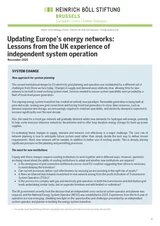
Updating Europe’s energy networks

Factsheet
Europe’s electricity grid planning was designed for a slower, fossil-based energy system. Today, rapid renewable deployment, rising electricity demand and the emergence of hydrogen call for a new institutional framework. This factsheet outlines how forward-looking, coordinated planning can help achieve climate neutrality by 2050. It recommends that Member States develop spatial energy plans, that stronger unbundling rules prevent conflicts of interest, and that an Independent EU Energy System Planner be created to improve cross-border coordination and efficiency.
2024-11-04-12_30_59-hbs_fs_north-sea-renewables-final.pdf

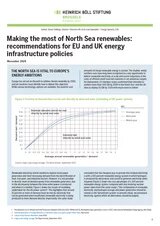
Making the most of North Sea renewables

Factsheet
Europe has set out on the path to achieve climate neutrality by 2050, and all countries must identify how to deliver this objective. While various technology options are available, the need for vast amounts of cheap renewable energy is certain. The shallow, windy northern seas have long been recognised as a key opportunity to deliver renewable electricity at scale and recent reductions in the costs of offshore wind have led countries to set ambitious targets for deployment.
fair-allocation-of-energy-network-costs_page_1.png

Fair allocation of energy network costs

Policy brief
As Europe electrifies heating, transport, and industry, its electricity grids are facing an unprecedented transformation. Meeting the growing and increasingly complex demand will require hundreds of billions in new investments – costs that risk falling heavily on consumers. This brief examines how better network tariff design can balance fairness and efficiency, reward flexibility, and make Europe’s energy transition more just and affordable for everyone.
2025-04-30-10_35_06-20250430.png

European energy infrastructure for 100% renewables

Study
The EU faces critical decisions on energy infrastructure planning and deployment to meet its climate goals, aiming for a 55% emissions reduction by 2030 and net-zero by 2050. A 100% renewable energy system, eliminating fossil fuels and nuclear energy is seen as the most viable solution. However, current EU energy infrastructure policy and planning are insufficient, risking lock-in to outdated technologies.

Accelerating the European Energy Transition

Policy Paper
In order to advance the European energy transition and distribute the costs and benefits more fairly, the EU must find better steering instruments. This policy paper provides recommendations for the necessary acceleration of the European energy transition.

Related content