The Western Balkans have demonstrated resilience to the security risks created by Russia’s aggression in Ukraine. But the momentum for EU enlargement of the past two years is already starting to fade as both pull and push factors are weakening and a new stasis is visible on the horizon.
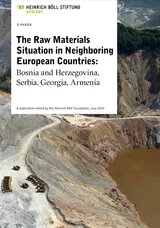
Critical raw materials and rare earths are of great economic importance for the European Union. This publication reflects the raw materials situation in four neighboring European countries: Bosnia and Herzegovina, Serbia, Georgia, and Armenia.
In his book, author Vedran Horvat takes a personal journey through the last two decades of politics in the Western Balkans and sheds light on the potential of green politics under extremely difficult conditions.
For at least three decades, the EU and its Member States have engaged in a process of “externalisation” – a policy agenda by which the EU seeks to prevent migrants and refugees setting foot on EU territory by externalising (that is, outsourcing) border controls to non-EU states. This report aims to contribute to public and political debate on the transparency, accountability and legitimacy of the externalisation agenda, based on case studies on three key target states for the EU – Bosnia and Herzegovina, Morocco and Niger.
The analytical commentaries of this issue discuss the prospects for a just green transition in the Western Balkan countries and their particular contexts of structural injustices in the societies and transition legacies. The fundamental economic and technological changes for a decarbonisation of the widely coal dependent economies in the region need to be accompanied not only by another attitude to nature and biodiversity but also by a new set of social relationships and innovations in governance and civic participation.