

Agribusiness Atlas 2026
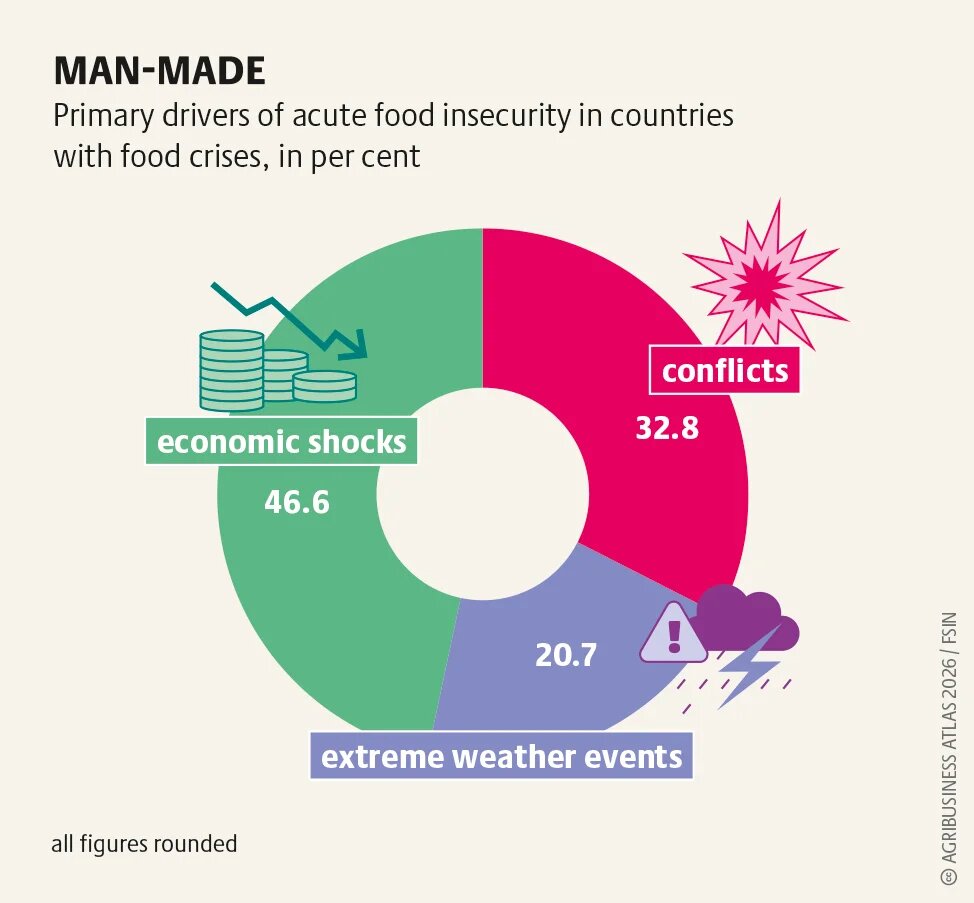
Wars and speculation are pushing up prices of agricultural commodities and food worldwide. Public buffer stocks for food can help cushion inflation and the impact of price shocks.

Low and middle-income countries are hit hardest by rising commodity prices: food becomes more expensive, overall inflation accelerates, and food insecurity deepens. In countries that are heavily dependent on food imports, price shocks on global markets also exacerbate existing debt problems. Angola, Mozambique, and Rwanda, which import almost all the wheat they consume, exemplify this trend. Rising world market prices for agricultural commodities have negative impacts in the Global North as well. During the COVID-19 pandemic and following the start of Russia's full-scale invasion of Ukraine, rising commodity prices drove inflation in the United States and Europe, placing a disproportionately heavy burden on low-income households. Studies indicate that soaring prices have fuelled the rise of right-wing populist forces.
In times of crisis, agricultural markets become even more susceptible to speculation, pushing prices higher. Immediately after Russia's invasion of Ukraine, speculative agricultural funds attracted as much money in a single week as they would normally receive over an entire month. What, then, can be done? At their summits in Brazil and South Africa, the G20 countries discussed stabilising prices through public buffer stocks for food. The principle is simple: public authorities purchase agricultural products when prices are low and release them onto the market when prices are high.
In the years following the Second World War, public commodity reserves played an important role at both the national and international level. Yet many of these reserves were closed as part of austerity programmes. Economic crises in South America and Africa in the 1980s led to a sustained collapse in many commodity prices. When many governments began to deregulate their markets under neoliberal policies, national reserves were dismantled. In some countries, however, public stocks have continued to play an important role. Populous countries such as China, India, and Indonesia still stabilise the prices of key foodstuffs through large public buffer stocks, often in combination with trade restrictions. In countries such as Bangladesh, Japan, Kenya, Norway, South Korea, Switzerland, and Uzbekistan, smaller reserves are used to cushion supply shortages following crop failures or trade crises.
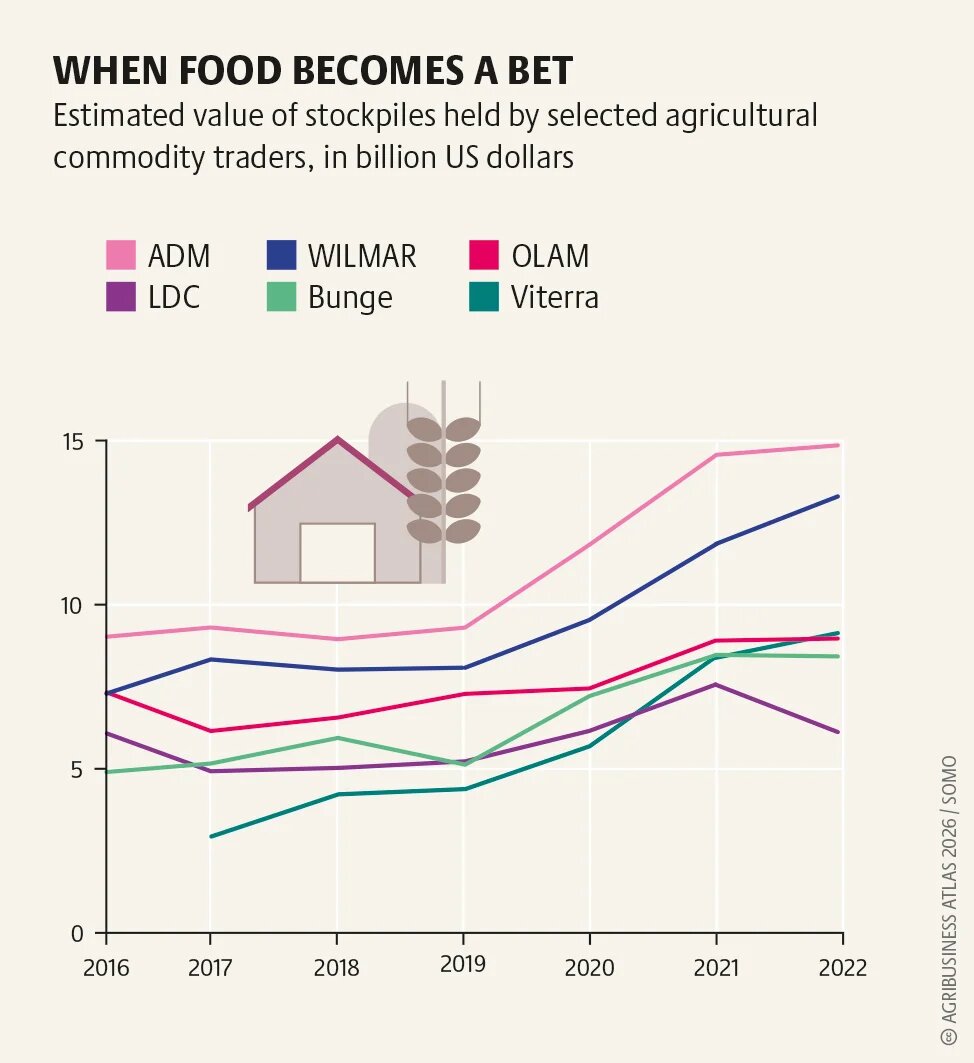
Private corporations, such as agricultural traders, also hold commodity stocks, but not with the aim of stabilising prices. When calculating their profits, agricultural businesses and trading corporations do not factor in the consequences of sharp price fluctuations, such as hunger, debt or inflation. As a result, far smaller quantities are stored than would be desirable from a societal perspective. In times of crisis, agricultural markets are also prone to speculative bubbles and panic buying. The situation is further aggravated by the fact that large agricultural trading corporations do not disclose information about their stock levels.
Public food stocks for food, by contrast, can help to stabilise markets in times of crisis. When they are well-designed and transparently managed, they can even do more than merely stabilise prices: they strengthen local markets and can support farmers in making the transition towards greater sustainability. Brazil provides a clear example in its state supply agency, CONAB. When market prices for agricultural goods fall below a threshold previously set on the basis of production costs, the agency intervenes. It either purchases directly from producers or pays them the difference between the market price and the guaranteed minimum price. The purchased products are then stored or supplied to school canteens. This also helps to create a market for sustainable products: CONAB deliberately sources produce from small-scale family farms and supplies them to community kitchens, schools, and food distribution centres for low-income households. This is made possible by Brazil's school feeding programme, which requires at least 30 per cent of the food served to come from family farms, preferably from local and environmentally sustainable production.
For public food stocks for food to work effectively, several measures must be in place. Continuous monitoring of prices and production volumes is essential. In 2024, the European Union established an expert commission for this purpose. In addition, the reserves should be managed by independent, democratically accountable authorities. Public food assistance programmes, as well as hospitals and canteens in public institutions, can support agriculture by purchasing stored products and using environmental standards to create targeted incentives for sustainable production. If regional markets become oversupplied, minimum prices should be lowered or linked to production quotas to prevent overproduction.
A handful of corporations dominate our food system, setting prices, profiting from crises, and driving relentless pressure on the environment, farmers, and consumers alike. The Agribusiness Atlas 2026 traces how this concentration of power took hold, and charts the political pathways toward a fairer food system built around the common good.
