

Interview
Did Africa’s first G20 presidency deliver on its promise of solidarity, equality and sustainability? Our Head of Programme for EU and International Politics, Dr. Katharina Emschermann, spoke with Paula Assubuji, Director of the Heinrich-Böll-Stiftung's office in Cape Town, about what the Johannesburg G20 and the AU-EU summit in Luanda reveal about power, inequality and the state of multilateral cooperation.

Dr. Katharina Emschermann: The theme of the South African G20 Presidency was "Solidarity, Equality, Sustainability" - in what ways has the G20 (not) delivered on that theme?
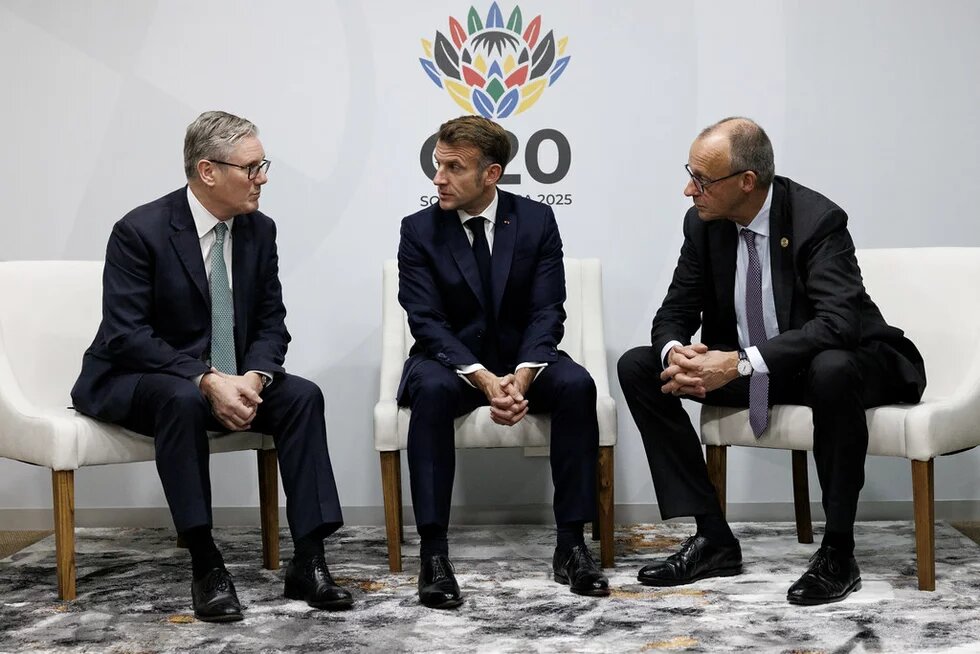
Paula Assubuji: The 2025 G20 Summit in Johannesburg was a historic milestone — the first time the G20 convened on African soil. Under South Africa’s presidency, the theme “Solidarity, Equality, and Sustainability” carried more than symbolic weight; it represented an effort to shift not just the venue but the direction of global debate. The meeting unfolded amid deep global fractures — rising geopolitical rivalries, new and ongoing conflicts, widening inequality, and mounting economic uncertainty. The situation was further complicated by the United States, the next G20 chair, which wavered on its participation until the very last moment. That hesitation cast a shadow over the summit’s goal of global unity and made the idea of “solidarity” seem more aspirational than real.
So, how would you measure “success” in this context?
In such a polarized climate, measuring the success of South Africa’s presidency is not straightforward. What “success” even means depends on where one stands. Personally, I find it useful to think about it across three levels: agenda-setting, which considers whether South Africa’s core values—solidarity, equality, and sustainability—shaped the G20’s focus; outputs, which refer to what appeared in official statements and working-group reports; and outcomes, which involve whether any real policy action or funding followed those commitments. In this framework, I think that solidarity points to how well the group cooperated, equality relates to how strongly African and Global South issues were elevated, and sustainability concerns climate and green development progress.
Officially, and in general South Africa’s presidency is described as a success. On paper, it achieved a lot. The final Leaders’ Declaration reaffirmed commitments to debt relief for low- and middle-income countries, cleaner energy, and inclusive growth, among others — all pillars of South Africa’s theme. Even more notably, Pretoria introduced the Africa Engagement Framework (AEF), meant to give Africa a standing channel for dialogue within the G20. Over 130 side meetings and working sessions were hosted, drawing attention to issues that African nations have long struggled to place on the global agenda. These achievements strengthened Africa’s diplomatic visibility and fulfilled much of what South Africa aimed to do in terms of agenda-setting and visibility.
How was the summit perceived by civil society?
Civil society and independent analysts see things differently. Many argue that while the presidency looked successful, it was also highly performative. The G20 remains a voluntary club — decisions are not binding, and much depends on the political will of major economies. The 30-page declaration, while broad and optimistic, lacks clear timelines or enforcement. Similarly, the C20 Social Summit, intended to amplify citizen voices, was seen by several observers as more symbolic than influential. It created an appearance of inclusion but didn’t necessarily alter how decisions were made.
Perhaps the hardest part of the theme to realize was “equality.” Power imbalances within the G20 are structural and persistent. Even with an African nation setting the agenda, influence over finance, technology, and implementation largely stayed with the wealthiest members. That tension reflects a broader reality: the G20 may speak the language of inclusivity, but it still operates within an unequal global order.
All things considered, what is your assessment of South Africa’s G20 presidency?
In all, South Africa’s G20 presidency did something meaningful — it placed Africa at the heart of global discussion and demonstrated a growing diplomatic confidence. Yet, whether this visibility turns into genuine, long-term change remains to be seen. For now, Johannesburg 2025 feels like a crucial step forward, but not yet the transformation its theme suggests.
What does the outcome of the summit say about the state of multilateralism and the role of Global South actors in global governance?
The outcome of the 2025 G20 summit offered a fairly honest snapshot of where multilateralism stands today and how actors from the Global South are shaping global governance. And here, I use multilateralism simply to mean a shared political space where countries work together, follow common rules, and try to address problems collectively. Judged against that standard, the Johannesburg summit neither revived cooperative global politics nor revealed a system in collapse. What I saw instead was a strained, imperfect, but still functioning multilateral order or convening.
How so?
Even with the United States boycotting the meeting and warning that no declaration would be possible, the G20 still managed to adopt a comprehensive leaders’ declaration. To me, that alone shows that most governments still see value in the G20 as a key venue for tackling global economic and development issues. Some concrete outcomes—such as commitments on reforming the global financial architecture, advancing debt relief, and lowering the cost of capital for developing countries—demonstrated that coordinated action is still possible, even in a fractured geopolitical landscape.
But the hard time the South African chair had in brokering consensus also made clear how much the G20 still relies on a basic level of political alignment among its members. The summit exposed just how vulnerable consensus-based institutions become when powerful states disengage or pursue their own unilateral paths.
South Africa’s presidency nonetheless highlighted not only what Global South leadership can achieve, but also the limits it continues to face. Pretoria pushed issues that matter deeply across Africa and the wider developing world—long-term development financing, governance reforms at international financial institutions, and a stronger voice for emerging economies in global decision-making. These efforts, in my view, did not transform the G20 overnight, but they did widen the agenda and underline Africa’s role as an active participant in shaping global governance, rather than a passive recipient of decisions made elsewhere.
At an institutional level, the summit reaffirmed that the G20 still matters as a forum for coordinating global economic policy. Even in a moment when unilateralism is gaining ground, states clearly still recognize the need for structured channels of cooperation.
So, what’s ahead?
The outcomes of the Johannesburg Summit suggest to me that the future of multilateralism will likely be shaped less by dramatic breakthroughs and more by the steady engagement of governments committed to keeping the system functional. The Global South’s influence in that process may well improve. With persistent participation and more confident leadership, these countries could help push global governance toward a more progressive, inclusive and development-oriented trajectory. In a fragmented world, such contributions matter—not because they erase political divides, but because they keep open the possibility of collective action when it is most urgently needed.
Right after the G20 summit, the AU-EU (African Union - European Union) summit took place in Luanda, Angola, marking 25 years of formal ties. What challenges is the partnership facing?
The 2025 AU–EU Heads of State Summit in Luanda marked 25 years of formal cooperation between Africa and Europe, a relationship that has grown more structured over time, yet continues to face deep, unresolved challenges. As both continents reflected on this milestone, the central question, at least to me, was whether the next quarter-century could finally produce a genuinely balanced and transformative partnership, or whether old asymmetries would continue to undermine trust.
Despite real achievements, the AU–EU relationship remains to date constrained by long-standing problems. In my view, the partnership is still shaped by historical imbalances and unequal structures for collaboration. These power asymmetries lie at the heart of many current tensions, reinforcing a widely shared perception among African governments, civil society actors, and policy analysts that the AU–EU relationship continues to reflect deeper structural patterns rooted in colonial-era logics. Slow or uneven delivery on EU pledges, fragmented implementation, and heavily bureaucratic financing tools have further eroded confidence.
What are some of the friction points?
Limited follow-up between summits; differing approaches to governance, migration, and multilateral reform; and the growing influence of other global actors such as China, India, Türkiye, and Gulf states. On Europe’s side, shifting domestic politics and economic pressures complicate external engagement. On the African side, weak infrastructure, institutional fragilities, and inconsistent implementation capacity continue to hamper progress.
Against that backdrop, how would you evaluate the AU-EU summit in Luanda?
Many observers have noted that the Luanda summit repeated a familiar pattern: ambitious declarations without the specificity needed for implementation. While the summit did produce several concrete-sounding commitments, including support for major infrastructure and connectivity projects (most prominently the Lobito Corridor), expanded Global Gateway investments, and targeted funding for renewable energy, digital infrastructure, and youth or SME entrepreneurship. And leaders also reaffirmed security cooperation, including support for African-led peace operations, and announced plans for a joint implementation and monitoring mechanism. The pledges still lack clear timelines, project-level budgets, and binding agreements between governments and implementing agencies. Until these details are in place, the gap between announcements and real-world implementation will persist, and the commitments will remain political intentions rather than actionable cooperation, funding commitments and enforceable policy mechanisms.
By taking place immediately after the first G20 leaders’ meeting in Africa, and by building on the review of progress, the AU-EU anniversary summit created a unique moment to rethink the EU–Africa relationship. What would be an aspiration for the next 25 years?
Looking ahead, the aspiration for the next 25 years should be to turn the AU–EU partnership into one grounded in genuine equality and shared benefit, in justice and fairness, and mindful of the historical legacies of extraction that continue to shape Africa–Europe relations.
What issues should the partners focus on moving forward?
Climate and energy cooperation should, in my view, sit at the heart of the next phase of AU–EU relations, even though priorities often diverge. African countries emphasize adaptation, accessible climate finance, and a just energy transition that supports industrialization. Europe, meanwhile, tends to prioritize emissions reduction and the security of clean-energy supply chains. African leaders have repeatedly cautioned that EU regulatory measures, such as the Carbon Border Adjustment Mechanism (CBAM) and stringent supply-chain standards, risk becoming de facto trade barriers unless accompanied by fairness, flexibility, and real support for African industries.
This requires stronger dialogue between summits, clearer jointly defined priorities, and far more consistent implementation.
Key areas should further include advancing inclusive and sustainable African industrialisation, treating the green transition and human mobility as shared opportunities, and working together on peace and multilateral reforms that promote a more balanced global order.
In essence, the Luanda Summit fell short of marking a decisive shift. One can only hope it will not take another 25 years to move from declarations to delivery — from rhetorical partnership to tangible, measurable progress. Time, especially in the face of climate and socioeconomic pressures, is not on either partner’s side.


