Water Atlas 2025
Healthy ecosystems purify water and protect against floods and droughts. However, the climate crisis is disrupting natural cycles and threatening habitats around the world. Protecting peatlands, wetlands, and coastal areas is not only an ecological priority but also a social imperative.

In their search for life on distant planets, scientists look for evidence of water: where there is water, there may be life. On our blue planet, we know that life began in the oceans, later evolving into diverse species that populate the land, seas, and skies.
Water and biodiversity are intimately connected. Different aquatic ecosystems support various types of flora and fauna. Distinct species of catfish inhabit salty oceans, freshwater rivers, and brackish backwaters. Different bird species have evolved to hunt prey in specific types of aquatic habitats. The health of these ecosystems is key to the survival of such specialised species.
Diversity is essential for a healthy ecosystem. Clean water supports the breeding and growth of species. In turn, diverse communities of flora and fauna work together to cycle and purify water. Species such as cattails, water hyacinth, and certain microbes specialise in removing pollutants, toxins, and heavy metals from water, while shellfish, reeds, and roots act as natural filters. Without such diversity, some ecosystems would gradually become incapable of supporting life.
Ecosystems like wetlands, floodplains, moors, and forests contribute to water cycling at the planetary level. Water cycles through these ecosystems in different forms: water vapour rises from the ground and from leaves, condenses into clouds, and falls to the ground again as rain or snow.
Wetlands have porous soils, rich in organic matter, which retains water effectively, like a sponge. In heavy rains, wetlands absorb and store the excess water, preventing floods. As the surrounding areas dry up, the wetlands release their water slowly, mitigating droughts. Floodplains serve a similar role by storing and distributing excess water, reducing the risk of floods and enhancing soil fertility.
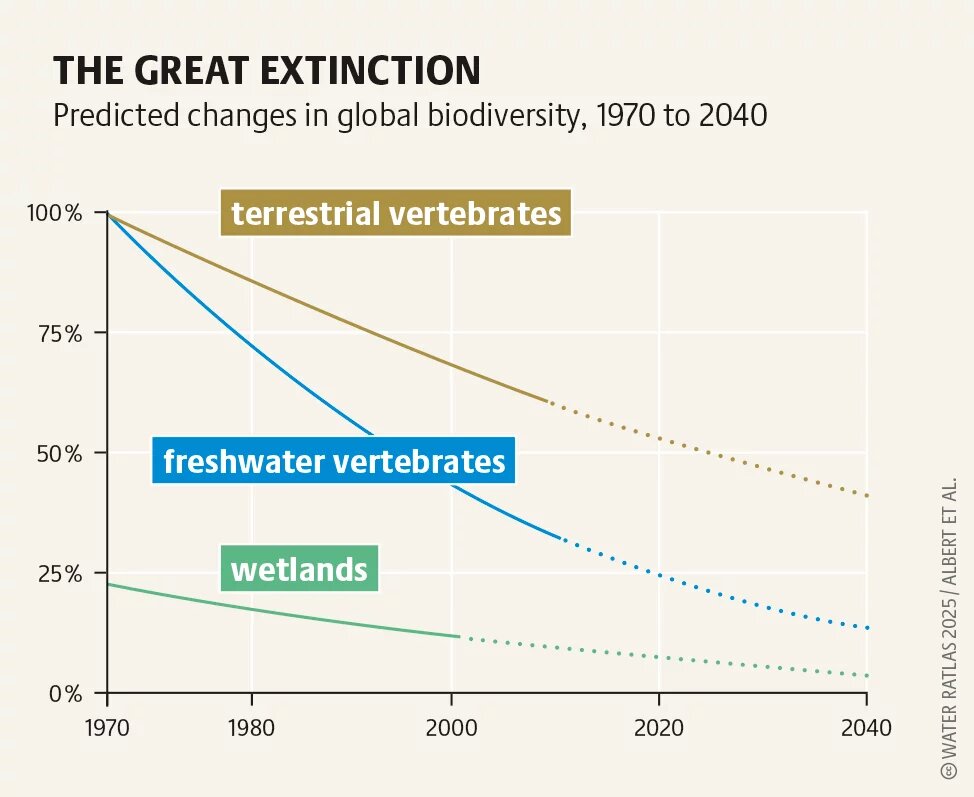
The planetary water cycle is severely affected by the climate crisis. Ecosystems may be lost temporarily or permanently; habitats may become fragmented or degraded, and food chains may be disrupted. Species that are unable to adapt may dwindle and become extinct. This is especially problematic if the species in question is a keystone species, one that is crucial for maintaining the structure and function of an ecosystem. Alligators and crocodiles are prime examples of keystone species in wetland environments. As droughts fragment their habitats and breeding sites, this affects their populations, in turn influencing many other species that directly or indirectly depend on them.
The oceans are also suffering from the extreme effects of the climate crisis. Oceans absorb excess carbon dioxide (CO₂), a major greenhouse gas, which helps maintain the global carbon balance. However, absorbing so much CO₂ disrupts the natural pH levels of seawater, making it more acidic and reducing the number of carbonate ions, which corals and shellfish need to build their skeletons and shells. As these organisms are often also keystone species, the rising acidity can ripple through the entire marine food web. Increasing seawater temperatures also stress corals, causing them to expel the symbiotic algae that provide them with food. This bleaching makes corals more susceptible to disease and starvation. Whole reefs may die if the water temperatures do not return to a safe range.
Biodiverse systems are better than low-diversity systems at providing various types of ecosystem services that benefit humans: regulating services for the climate, water, and air; provisioning services for food and medicine; and supporting services like nutrient cycling, photosynthesis, and the formation of fertile soil. Water nourishes human life and well-being, and is essential for industry and progress.
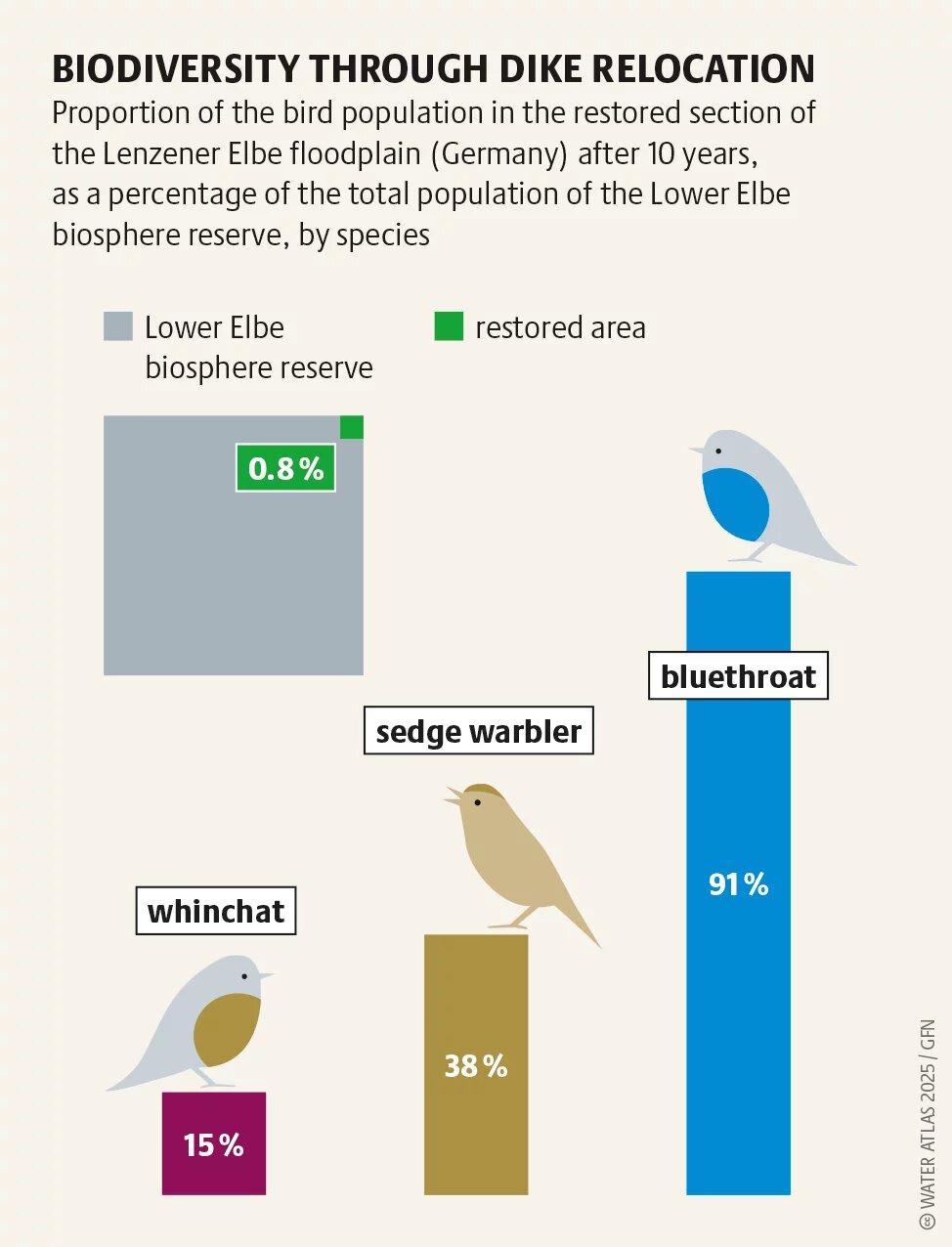
Consequently, a reliable ecosystem-services-based approach is essential to manage water and biodiversity effectively at both national and global levels. The United Nations Convention on Biological Diversity acknowledges the critical link between water and biodiversity. It also recognises the importance of ecosystem-based approaches such as rewetting peatland, restoring river floodplains, and restoring ecologies in maintaining this balance.
Rewetting peatlands is a key strategy used by the Association of Southeast Asian Nations. Restoring water levels to their natural state in such areas helps prevent fires, reduce subsidence, and restore peatland ecosystems. Reintroducing native species can also support biodiversity. Peatlands are naturally flooded, so restoring them to their natural state creates optimal conditions to support biodiversity and mitigate the climate crisis. Organic material that accumulates in the peat decomposes only slowly or not at all, making flooded peatlands ideal carbon sinks.
Rewetting peatlands must involve the communities that live around and depend on them. Introducing paludiculture, or forms of agriculture suited to wetland conditions, can balance biodiversity and socio-economic viability, while sustaining the livelihoods of these communities. The success of such approaches depends on dedicated institutions at both the landscape and drainage-basin levels, supported by strong legislation and political will to preserve biodiversity. The resulting ecosystem benefits, in terms of enhanced water and biodiversity services, can encourage support for such governance frameworks.