As the EU enters a new five-year cycle, its ambitious Green Deal targets and European Climate Law face growing uncertainty due to concerns over industrial competitiveness and economic growth. Additionally, backlash against the EU’s climate policies, fuelled by farmers’ protests, could hinder the promise of a just green transition. Yet, as the planet warms rapidly, climate change will continue to affect EU economic sectors, including agriculture and food. Greater climate variability and extremes will impact global food systems, posing supply chain challenges and heightening food insecurity. These trends highlight the need to invest in sustainable agri-food systems as part of climate mitigation and adaptation.
This legal opinion written by the non-profit organization front-LEX elaborates on the accountability of Frontex under EU law for ongoing violations of the fundamental rights of asylum seekers, committed in relation to its activities in Greek waters.
Ten years after the 2013 Lampedusa shipwreck killed an estimated 360 migrants, state-led search and rescue operations are persistently absent in the Mediterranean — despite the continuously high number of distress cases of persons attempting to cross in unseaworthy boats. In response, over the past 10 years, various non-profit actors have set up civil search and rescue operations. However, their operability and effectiveness fluctuate to a considerable degree depending on state actions. This is because European governments have been restricting and hampering civil search and rescue activities in various ways over the past years. In light of this, the present study examines the options for the German government to support civil search and rescue operations at the national and European level.
For at least three decades, the EU and its Member States have engaged in a process of “externalisation” – a policy agenda by which the EU seeks to prevent migrants and refugees setting foot on EU territory by externalising (that is, outsourcing) border controls to non-EU states. This report aims to contribute to public and political debate on the transparency, accountability and legitimacy of the externalisation agenda, based on case studies on three key target states for the EU – Bosnia and Herzegovina, Morocco and Niger.
Migration as well as supporting people in flight is increasingly treated as a criminal act in Europe. This toolkit, created by Border Violence Monitoring Network and Heinrich Böll Stiftung Thessaloniki, seeks to support affected Human Rights Defenders by showing them mechanisms and avenues for help and self-defence in cases of criminalisation at various levels.
This policy paper assesses the effects of the EU Turkey Refugee Agreement for Greece, Turkey and the European Union. It provides an overview of the 2015 context and the development of the agreement and analyses its repercussions in the region as well as for the EU as a whole. It concludes that the EU needs a strong alternative to the current agreement with Turkey, which is rights-based and sustainable.
This study critically examines some of the gendered and racialized notions about migrants embedded in and institutionalized through the EU Pact on Migration and Asylum, by engaging with the definitory and conceptual unclarities as to who the Pact defines as “especially vulnerable groups” and according to which criteria, making a relevant contribution to ongoing debates with regard to the EU’s future migration and border politics.
This paper critically maps the current EU legal framework for deprivation of liberty and restriction on freedom of movement of migrants and asylum seekers, as well as resulting practice, to finally to discuss the 2020 legislative proposals for EU asylum reform. The discussion of the law and practice is put in the context of the international and EU human rights law framework governing deprivation of liberty and restriction on freedom of movement.
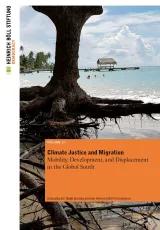
With climate change looming, anxiety over immigration from the Global South is increasingly fuelled by apocalyptic fears of ecological breakdown. How should policymakers respond to the reality and future prospect of vast populations being displaced and relocated in an era of global heating?
Current EU migration policies' increased focus on returns raises concerns on the adequacy of such measures with EU standards and fundamental rights. This publication highlights the problems and difficulties returnees face in Afghanistan, Syria, Tunisia, Senegal and Kosovo.
This study shows that port closures are governed not only by the law of the sea and human rights law, but also by WHO law and that non-refoulement obligations continue to apply even in emergency situations while a derogation is not permissible under international law.
It is of vital importance that rescuees are brought to a “Place of Safety”. The study analysis to which extend third countries can be considered "safe" and NGO rescue vessels can be obliged to disembark rescued migrants and refugees in places which are unsafe.
In this policy paper “A Local Turn for European Refugee Politics” the Heinrich-Böll-Stiftung puts forward proposals for a more active role of the municipalities in refugee and asylum policy.
The EU-Africa migration summit in Valletta in November 2015 gave birth to a new European funding instrument: the EU Emergency Trust Fund for Africa (EUTF). This study comes to the conclusion that the implementation of migration policy projects supported by EUTF funding primarily benefits the (wealthier) member states of the EU.
Despite the presence of migration in the discourse of politicians, media and the general public in recent years, there is a persistent lack of facts about the life situations and motivations of newcomers to Europe. With this book the Heinrich Böll Foundation and the Institute for Public Affairs aim to contribute to a fact-based debate on the politics and policies of migration in Central Europe.
Report from the Commission "Perspectives for a Forward-Looking and Sustainable Refugee and Immigration Policy" of the Heinrich Böll Foundation with important impulses for politics and society in migration and integration.
There are many reasons to migrate: This publication provides a forum for scientists from Pakistan, Somalia and El Salvador, people, who had to flee from Syria, Burundi and Malawi as well as migrants and activists from Niger and Senegal to emphasise how little we know about "causes of migration and flight".
The Science for Environment Policy News Alter featured our research Time To Act - How the Eu can lead on Climate Change and Migration in its latest issue.
The policy paper was elaborated by members of the ENoP Working Group on Africa-EU Relations. In order to complement the European perspective, three chapters have been co-authored by African partners.
The right policy framework and international cooperation are key for managing migration towards fostered development. However, in order to achieve tangible results and positive trends in migration, a new approach must be explored.